 Slot machine directory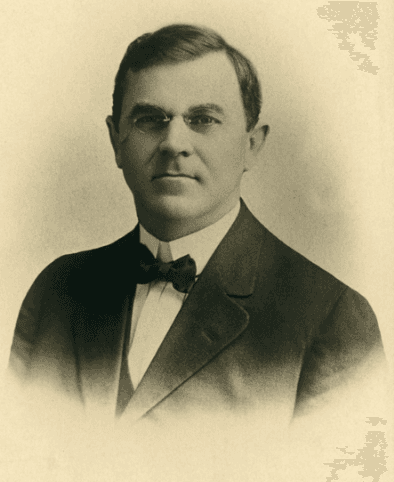
Charles Fey
Inventor of the Liberty Bell
A San Francisco mechanic who popularized the three-reel automatic-payout machine around 1895 the template for every modern slot.

From ancient chance to progressive jackpots: gaming houses, the Belle Époque, Las Vegas, slot machines, the internet, and regulation.
Inventors, entrepreneurs, and icons who shaped the casino imagination from European salons to virtual lobbies.
Inventor of the Liberty Bell
A San Francisco mechanic who popularized the three-reel automatic-payout machine around 1895 the template for every modern slot.
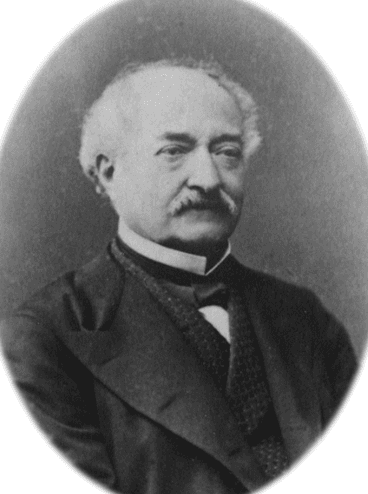
Architect of Monte Carlo
A spa-town gambling entrepreneur who structured Monaco’s Société des Bains de Mer and made Monte Carlo a Belle Époque myth.
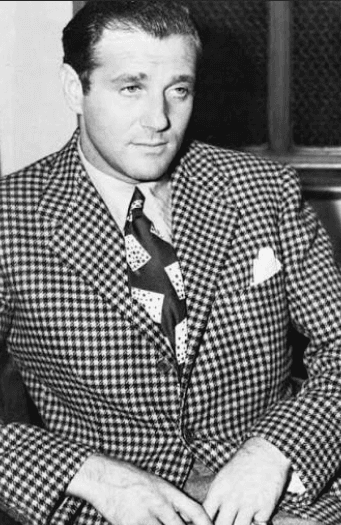
Flamingo myth of Las Vegas
The sulphurous face of the 1946 Flamingo, embodying in pop culture the Strip’s violent, spectacular birth beyond historical nuance.

Software pioneer (Microgaming)
Linked to Microgaming’s mid-1990s founding a symbol of the casino’s shift into software and the internet.

Probability and the geometry of chance
With Fermat in the seventeenth century, he founded probability calculus from wagering problems the mathematical language of the modern casino.
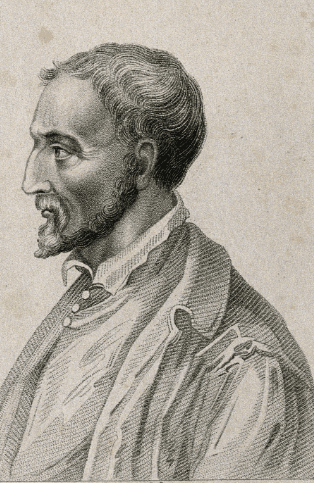
Renaissance thinker of dice
Physician and mathematician whose writings on dice games are among the earliest analyses of chance as an object of study.

Modern Strip resort builder
Emblematic developer of Vegas mega-resorts (Mirage, Bellagio, and more), marking the shift from motel-casino to mass-market themed palace.

CryptoLogic co-founder
A face of early iGaming infrastructure: encryption, payments, and platforms that let 1990s web casinos take real stakes.
Inventor of the Liberty Bell
A San Francisco mechanic who popularized the three-reel automatic-payout machine around 1895 the template for every modern slot.
Architect of Monte Carlo
A spa-town gambling entrepreneur who structured Monaco’s Société des Bains de Mer and made Monte Carlo a Belle Époque myth.
Flamingo myth of Las Vegas
The sulphurous face of the 1946 Flamingo, embodying in pop culture the Strip’s violent, spectacular birth beyond historical nuance.
Software pioneer (Microgaming)
Linked to Microgaming’s mid-1990s founding a symbol of the casino’s shift into software and the internet.
Probability and the geometry of chance
With Fermat in the seventeenth century, he founded probability calculus from wagering problems the mathematical language of the modern casino.
Renaissance thinker of dice
Physician and mathematician whose writings on dice games are among the earliest analyses of chance as an object of study.
Modern Strip resort builder
Emblematic developer of Vegas mega-resorts (Mirage, Bellagio, and more), marking the shift from motel-casino to mass-market themed palace.
CryptoLogic co-founder
A face of early iGaming infrastructure: encryption, payments, and platforms that let 1990s web casinos take real stakes.
Inventor of the Liberty Bell
A San Francisco mechanic who popularized the three-reel automatic-payout machine around 1895 the template for every modern slot.
Architect of Monte Carlo
A spa-town gambling entrepreneur who structured Monaco’s Société des Bains de Mer and made Monte Carlo a Belle Époque myth.
Flamingo myth of Las Vegas
The sulphurous face of the 1946 Flamingo, embodying in pop culture the Strip’s violent, spectacular birth beyond historical nuance.
Software pioneer (Microgaming)
Linked to Microgaming’s mid-1990s founding a symbol of the casino’s shift into software and the internet.
Probability and the geometry of chance
With Fermat in the seventeenth century, he founded probability calculus from wagering problems the mathematical language of the modern casino.
Renaissance thinker of dice
Physician and mathematician whose writings on dice games are among the earliest analyses of chance as an object of study.
Modern Strip resort builder
Emblematic developer of Vegas mega-resorts (Mirage, Bellagio, and more), marking the shift from motel-casino to mass-market themed palace.
CryptoLogic co-founder
A face of early iGaming infrastructure: encryption, payments, and platforms that let 1990s web casinos take real stakes.
Inventor of the Liberty Bell
A San Francisco mechanic who popularized the three-reel automatic-payout machine around 1895 the template for every modern slot.
Architect of Monte Carlo
A spa-town gambling entrepreneur who structured Monaco’s Société des Bains de Mer and made Monte Carlo a Belle Époque myth.
Flamingo myth of Las Vegas
The sulphurous face of the 1946 Flamingo, embodying in pop culture the Strip’s violent, spectacular birth beyond historical nuance.
Software pioneer (Microgaming)
Linked to Microgaming’s mid-1990s founding a symbol of the casino’s shift into software and the internet.
Probability and the geometry of chance
With Fermat in the seventeenth century, he founded probability calculus from wagering problems the mathematical language of the modern casino.
Renaissance thinker of dice
Physician and mathematician whose writings on dice games are among the earliest analyses of chance as an object of study.
Modern Strip resort builder
Emblematic developer of Vegas mega-resorts (Mirage, Bellagio, and more), marking the shift from motel-casino to mass-market themed palace.
CryptoLogic co-founder
A face of early iGaming infrastructure: encryption, payments, and platforms that let 1990s web casinos take real stakes.
CryptoLogic co-founder
Modern Strip resort builder
Renaissance thinker of dice
Probability and the geometry of chance
Software pioneer (Microgaming)
Flamingo myth of Las Vegas
Architect of Monte Carlo
Inventor of the Liberty Bell
CryptoLogic co-founder
Modern Strip resort builder
Renaissance thinker of dice
Probability and the geometry of chance
Software pioneer (Microgaming)
Flamingo myth of Las Vegas
Architect of Monte Carlo
Inventor of the Liberty Bell
CryptoLogic co-founder
Modern Strip resort builder
Renaissance thinker of dice
Probability and the geometry of chance
Software pioneer (Microgaming)
Flamingo myth of Las Vegas
Architect of Monte Carlo
Inventor of the Liberty Bell
CryptoLogic co-founder
Modern Strip resort builder
Renaissance thinker of dice
Probability and the geometry of chance
Software pioneer (Microgaming)
Flamingo myth of Las Vegas
Architect of Monte Carlo
Inventor of the Liberty Bell
Antiquity – Middle Ages
Long before neon and RNG servers, chance was already ritualized: dice, knucklebones, wagers on races and fights. Gambling begins where destiny meets the thrill of a stake.
The oldest traces of games of chance stretch back thousands of years. In Mesopotamia, Egypt, and the Greco-Roman world, archaeologists find six-sided dice, knucklebones, and records of wagers. These objects were not mere toys: they were used for casting lots, divination, settling disputes, and entertaining soldiers and traders. Chance, long read as a sign from the gods, gradually became a social space and sometimes a scourge in the eyes of religious or civic authorities.
Among Greeks and Romans, dice games (alea) and betting on chariot races or gladiatorial contests were woven into city life. Laws periodically tried to curb excess: partial bans, fines, policing of taverns. Yet the appetite for risk endured. The vocabulary of chance alea, fortuna saturated culture and philosophy: people already debated what belonged to luck, virtue, or fate.
In medieval Europe, cards and dice circulated through fairs, military camps, and inns. The Church often condemned money games as idle and ruinous; secular powers swung between fiscal tolerance and repression. More formal “mathematics of chance” emerged later, in the Renaissance: Gerolamo Cardano wrote on dice, and in the seventeenth century Blaise Pascal and Pierre de Fermat founded probability theory from problems about interrupted wagers. The modern casino would inherit both a popular culture of play and a scientific language of risk.
This long prehistory explains why the casino did not appear from nowhere. It institutionalizes what societies already practiced: a venue, posted rules, a house that takes an edge, and a promise of controlled entertainment. The journey from fortune’s dice to the regulated table is a story of cities, princes, and commerce not of chance alone.
1638
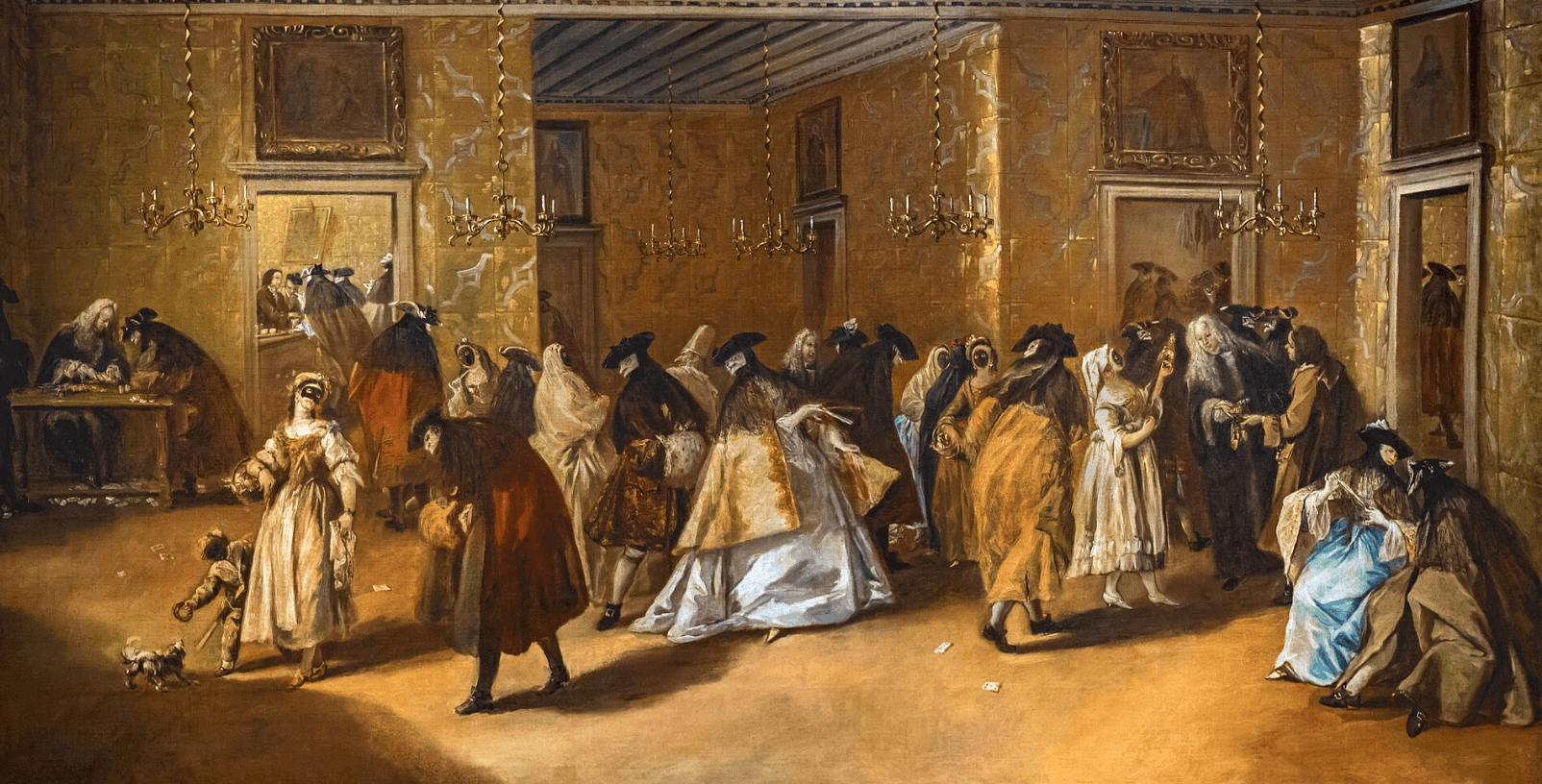
In 1638 Venice opened the Ridotto: a public gaming salon under the Republic’s control. The “house” model rules, entry, a bank took shape in Europe.
The Ridotto (from Venetian for a secluded room) opened at the Palazzo Dandolo, near San Moisè, during Carnival. The Serenissima saw a way to channel ubiquitous gambling, raise revenue, and regulate an activity that was hard to eradicate. Games such as biribi and baseta drew masked aristocrats and worldly speculation. It is among the earliest well-documented public gaming houses often cited as an ancestor of the modern casino.
The Ridotto was not “Las Vegas before Vegas”: access remained socially selective, the setting urban and seasonal, and public morals ambivalent. In 1774, amid scandal and debt, it was closed. But the idea had taken root: a dedicated room, an organization, a bank staking its funds against players. Other European towns experimented with discreet halls Baden-Baden, Spa, Aachen where spa culture and gambling joined forces to attract wealthy guests.
Through the eighteenth and early nineteenth centuries, gaming houses multiplied in seaside and spa resorts. Princes and municipalities found a rent; players found a social theatre. Rules slowly standardized: European roulette, trente-et-quarante, baccarat. Over time the house wins through a mathematical edge, even if a single night can create a winner. That economic architecture paid entertainment plus structural advantage remains the heart of today’s casino.
Between Venice and the spa towns, Europe invented the casino as an institution: neither pure clandestinity nor a mere fairground stall. When Monte Carlo and later Las Vegas radicalized the spectacle, they built on this precedent: a place where the state or a concession tolerates chance provided it yields order, image, and revenue.
1863 – Belle Époque
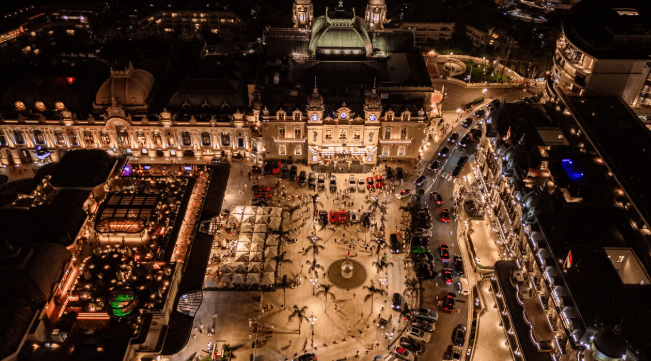
With François Blanc and the Société des Bains de Mer, Monaco turned a rock into a mythical destination. The casino became palace, fashion, and legend.
In the mid-nineteenth century, Monaco needed revenue. After difficult starts, François Blanc already experienced in Homburg took over the casino project and related infrastructure. In 1863 the Société des Bains de Mer structured the offer: gaming, hotels, gardens, entertainment. The Monte Carlo district was born as a brand before branding had a name.
Monte Carlo’s roulette, ornate rooms, etiquette, and proximity to the French Riviera captivated Belle Époque Europe. Writers, aristocrats, and new fortunes crossed paths; the press traded stories of wins and ruin. The casino was no longer only a betting room: it was a permanent stage, a social calendar, a luxury promise where chance was consumed as spectacle. Monaco long barred its own subjects from play, underlining the “exported” nature of the entertainment.
Blanc’s legacy reached beyond Monaco. He popularized the idea that a casino’s success rests on hospitality, trust in the rules, and a full destination offer (rail, hotel, opera). Baden-Baden, Evian, and Deauville followed similar resort logic. Even when national laws restricted gambling, the destination model remained a benchmark: people came not only to wager, but to inhabit a dream.
Twentieth-century wars and shifting morals redrew Europe’s gambling map. Yet the Monte Carlo imaginary evening dress, roulette, a terrace over the Mediterranean survived in film and advertising. Paradoxically, it prepared the ground for Las Vegas: where Europe had the palace, America would invent the monumental Strip and mass tourism.
1895
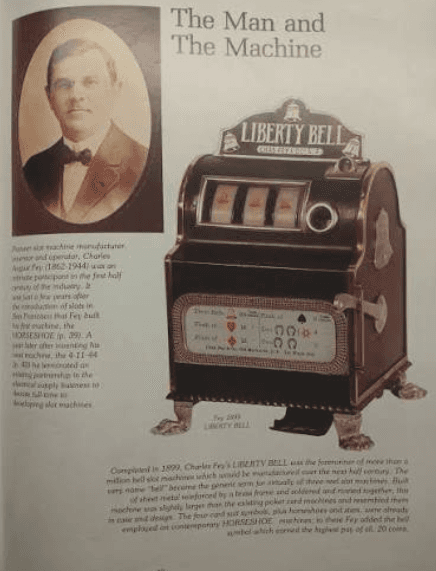
In 1895 in San Francisco, Charles Fey built the Liberty Bell: three reels, automatic payouts, and the template for the modern slot.
Before Fey, mechanical gambling devices already existed card machines, cigar and gum vendors. But the Liberty Bell, credited to Charles August Fey, marked a break: three spinning reels with symbols (bells, horseshoes, stars, card suits), a lever, and automatic payouts for posted combinations. Players no longer needed a cashier for every small win: the machine became a “pocket casino” for saloons and bars.
Success in the San Francisco Bay Area was swift. Copies and variants proliferated; manufacturers competed on ingenuity. Authorities grew uneasy: slots seemed too accessible, too habit-forming, too awkward to tax cleanly. Local bans, seizures, and workarounds (prizes in goods, “trade stimulators”) marked the early decades. Still the form stuck: reels, paylines, a symbolic jackpot.
In the twentieth century, electromechanics and then electronics transformed the slot. British fruit machines, American “one-armed bandits,” and later video screens extended Fey’s intuition: a short game cycle, intense sensory feedback, and a negative expectation masked by variable wins. Modern regulation (return percentages, RNG certification) would come much later; at first, mechanics and commerce led the dance.
In hindsight, the Liberty Bell is the direct ancestor of video slots, Megaways, and networked progressive jackpots. Changing symbols, adding lines, syncing machines through a server all refine the same gesture: spinning chance inside a box, again and again. Understanding Fey is understanding why slots still drive so much revenue in land-based and online casinos.
1940 – 1970
From Bugsy Siegel’s Flamingo to corporate resorts, Las Vegas invented the casino as a mass tourism industry neon, shows, and play around the clock.
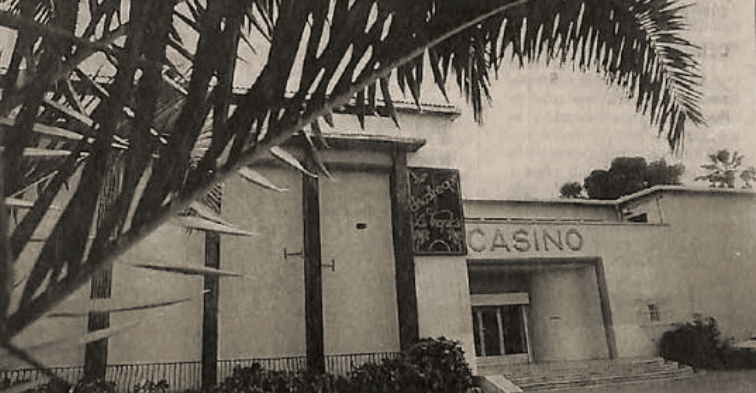
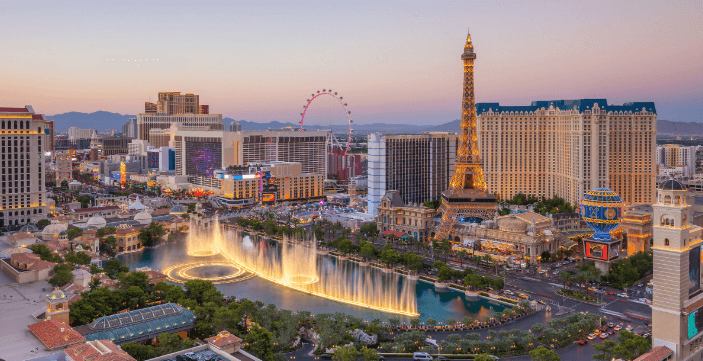
Nevada legalized gambling in 1931, deep in the Depression, to support the local economy. Las Vegas, a rail hub and desert oasis, first drew modest halls. After World War II the Strip transformed: hotel-casinos, pools, entertainment. Benjamin “Bugsy” Siegel and the Flamingo (opened 1946) embody the myth dubious money, Hollywood ambition, latent violence even though the real Vegas boom was more collective and corporate than legend admits.
In the 1950s–1960s Las Vegas became a national destination: the Rat Pack, neon, sports betting, slots by the thousand. The business model coupled rooms, dining, entertainment, and gaming; comps retained high rollers. Organized crime gradually gave way to publicly traded investors and stricter regulators. Howard Hughes bought properties; later groups such as Harrah’s and visionaries such as Steve Wynn reshaped the Strip into themed mega-resorts.
Las Vegas exported an aesthetic: the casino was no longer a hushed European club but a spectacle city. Atlantic City tried to compete on the East Coast; Asian hubs such as Macau rose on comparable concession-and-tourism logics. For global gambling history, Vegas set the volume standard: more machines, more tables, more visitors, more data on what sold.
That industrialization also prepared the virtual turn. When the web arrived, online operators inherited Vegas vocabulary jackpot, high roller, VIP while escaping geography. Without the Strip’s precedent, today’s pop culture of the casino would be hard to imagine.
1994 – 1996
In the mid-1990s, the internet, encryption, and early offshore licences made real-money play from a PC possible. The iGaming industry was born.
Around 1994–1996, technical and commercial pieces clicked into place. Microgaming, associated with founder Martin Moshal among others, built casino software for the young web. Operators hosted in jurisdictions such as Antigua and Barbuda offered tables and slots via downloadable clients or applets. InterCasino is often named among the earliest online casinos to take real stakes around 1996, relying on suppliers such as CryptoLogic for encryption and payment processing.
Players met a radical promise: play at any hour, outside land-based walls, with still-crude graphics that were already sticky. Deposits moved by wire, cheque, then cards with friction, fraud, and legal grey zones. The United States, Europe, and Asia reacted unevenly: some tolerated, some criminalized, some waited. The industry quickly learned affiliate marketing, welcome bonuses, and the race for new games.
CryptoLogic and other vendors popularized the B2B platform idea: a casino need not write all its code; it licenses a lobby, an RNG, a payment gateway. That model still structures the sector through today’s aggregators. Networked progressives, multi-million jackpots, and online tournaments appeared as soon as connectivity allowed. Trust became a selling point: RNG audits, security seals, live support chat.
Those pioneer years were chaotic but foundational. They fixed the vocabulary (RTP, wagering, cashout), the jobs (ops, compliance, CRM), and gambling’s geopolitics: pick a licence, a host, a bank. Everything that followed mobile, live dealers, national regulation continues that first leap into cyberspace.

2000s – today
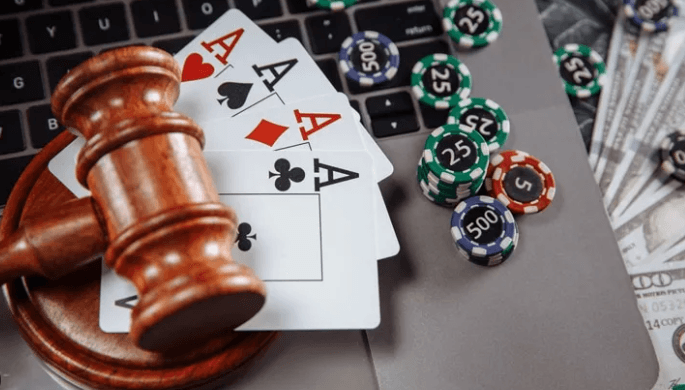
From the offshore Wild West to strict national frameworks, regulation redraws who may offer an online casino and on what terms.
As volumes grew, states stopped treating online gambling as a curiosity. The Malta Gaming Authority (MGA) became a European reference for B2C and B2B licences, with compliance, player-protection, and audit expectations. In the United Kingdom, the UK Gambling Commission (UKGC) runs one of the strictest regimes: advertising rules, anti-money-laundering controls, responsible-gambling tools, and high-profile sanctions for failures.
Curaçao long stood for a more flexible gateway for international operators administrative and tax appeal, but also criticism over transparency and consumer protection. The landscape there is evolving: reforms, sub-licensing, and a stated push toward international standards. Other hubs (Gibraltar, Isle of Man, Kahnawake in certain periods) played similar roles across eras.
In France, a controlled market opening (first online sports betting, poker, and horse racing) and the rise of a single regulator today’s Autorité nationale des jeux (ANJ) illustrate another path: historical monopolies on some segments, strict licensing, enforcement against illegal sites, and prevention messaging. The ANJ oversees offer compliance, advertising, and addiction-prevention measures within a clearly affirmed 18+ framework.
For the curious player, the lesson is simple: behind every colourful lobby sits applicable law and an authority sometimes several. Checking the licence, reading bonus terms, knowing your remedies: that is the modern face of the story that began in Venice public power still trying to frame chance.
2000 – 2020+
The twenty-first century multiplies formats: streamed live dealers, certified video slots, Megaways maths, and worldwide progressive networks.
Live casino reconnects the web to a real table: multi-camera studios, professional dealers, synchronized betting UIs. Roulette, blackjack, baccarat, and TV-style game shows (wheels, multipliers) attract players who want a human presence without travelling. Latency, HD quality, and studio regulation become industrial as much as technical issues.
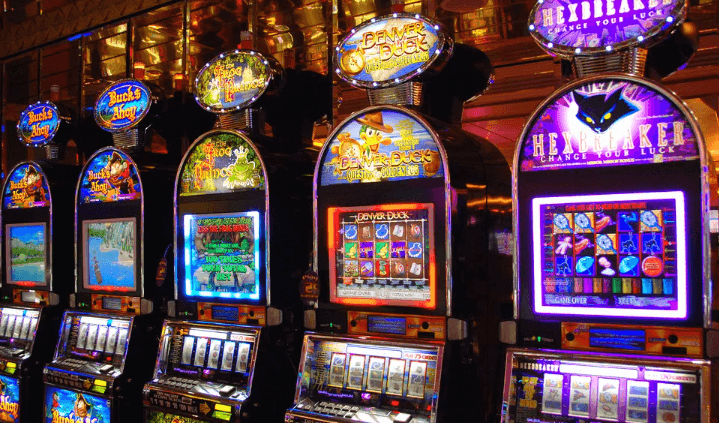
Meanwhile, RNG-driven video slots dominate catalogues. Studios flood the market with themes, free spins, bonus buys (where law allows), and extreme volatilities. Posted RTP and independent lab reports aim to reassure; sound design and reward loops aim to retain. Fey’s machine has become a global cultural product, updated weekly.
Megaways mechanics popularized especially through Big Time Gaming and its licensees break the fixed grid: a variable number of symbols per reel, thousands of ways to win. Progressive jackpots, fed by a slice of stakes across a network of machines or casinos, create towering pools and media winner stories. These innovations refresh marketing attention while restating the same mathematical truth: over time, the house edge remains.
Mobile-first design, content aggregators, tournaments, missions, and cashback complete the picture. Gambling history meets consumer software: rapid iteration, fierce competition, rising compliance. For a curious adult, these formats are fascinating provided they are read as designed, measured, regulated entertainment, not as wealth strategies.
18+
The history of chance is also the history of its harms. Play must remain an adult pastime framed and mindful.
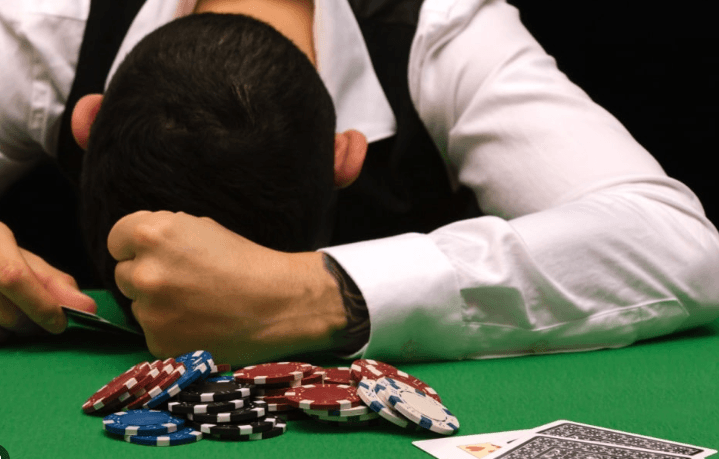
Gambling is strictly for adults (18+ depending on jurisdiction). No historical exposé should obscure that losses are normal and expected: the house is built to win over time. Set in advance an amount and a duration you can afford to lose without harming essentials and stop when the limit is reached.
Regulators (ANJ, UKGC, MGA, and others) require or encourage tools: deposit caps, self-exclusion, reality checks, links to support organisations. Using them is not weakness; it is the contemporary version of wisdom societies have sought since ancient dice: to tame chance without being consumed by it. If gambling stops being fun, seek help quickly.
CasinoVibz presents industry history and context for information only. Nothing here is financial advice or an invitation to play beyond your means. Enjoy yourself with clear eyes and keep control.
Gambling is for adults only (18+). It must remain entertainment, never a way to earn a living. Set a budget and a time limit, and use self-exclusion and limit tools offered by regulators and licensed operators. If gambling stops being fun, seek help early through official channels in your country.